
Cart
0
You may also like


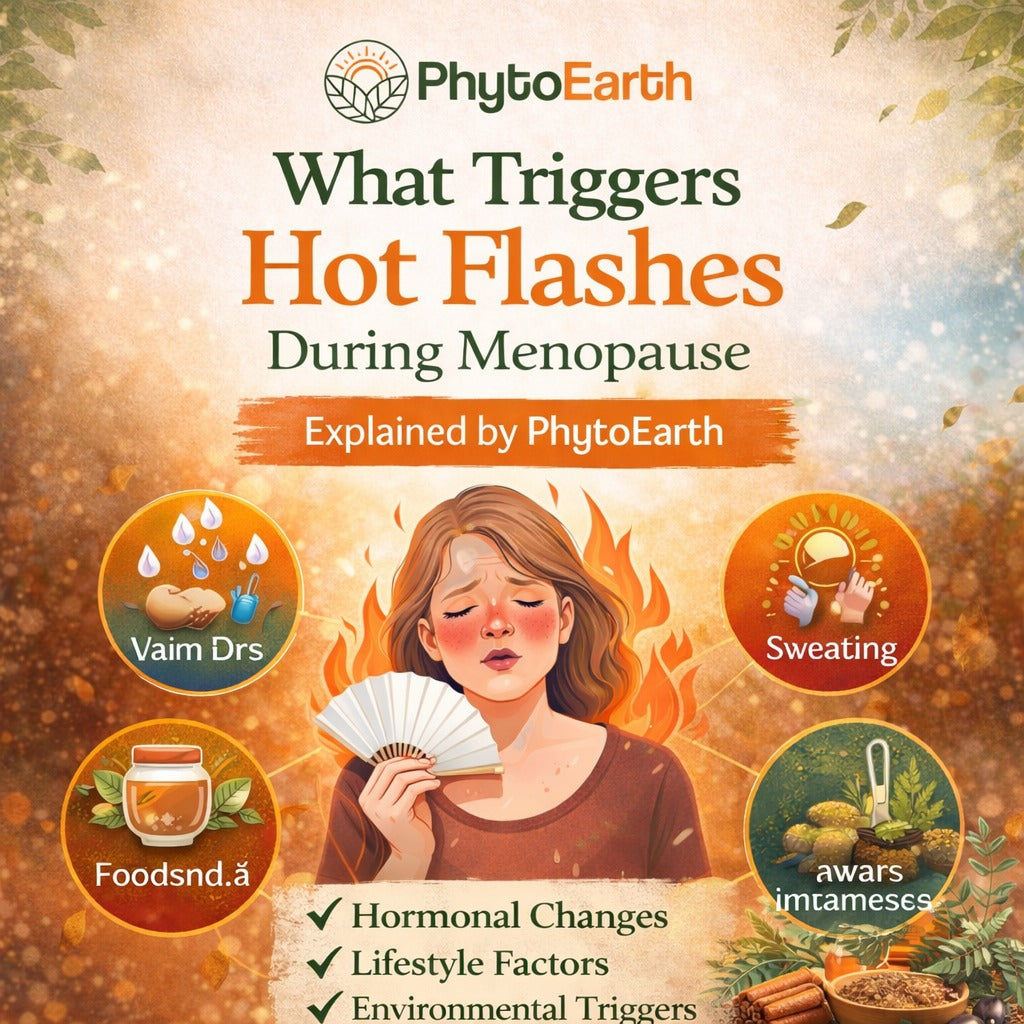
During the passage of time through Menopause transition, one of the most frequent changes that many women will experience will be Hot Flashes. Some women may only experience an occasional feeling of heat or warmth; others may go through repeated temperature changes, incredibly significant enough to affect their daily activities, sleep quality, or overall comfort. Identifying what triggers hot flashes during menopause will help transform these feelings of confusion into knowledge and therefore, create ways to develop lifestyle changes that would be supportive.
Hot flashes are hardly spontaneous. They tend to be predictable as they depend on hormonal changes, reactions of the nervous system, daily routines, surroundings, and stress of emotions. Understanding the relationship between these triggers and the body enables women to make practical measures towards greater comfort at this phase of life.
This guide provides the reasons for hot flushes, what usually causes them, when they usually happen and how natural lifestyle and herbal wellness can help to maintain balance in the long run.
A hot flash refers to the sudden feeling of heat spreading to the upper body, particularly the face, neck, and the chest. It can be accompanied by:
skin flushing
sweating
increased heartbeat awareness
mild dizziness
chills afterward
These episodes are generally referred to as vasomotor symptoms, that is, they are associated with altered reactions of blood vessels to changes in temperature caused by the brain.
Certain hot flushes take up to a minute, whereas others can take several minutes and then the body slowly normalizes its body temperature.
They are usually known as night sweats when they take place during sleep.
Hot flushes mainly happen because of the natural change of the estrogen levels in the transition to menopause. Estrogen is also significant in the process of controlling the body temperature center which is in the hypothalamus.
During this phase:
estrogen does not decrease consistently but varies.
The hypothalamus gets more sensitive to minor changes in temperature.
the body initiates cooling mechanisms sooner than it should.
The body might therefore react as though it is overheating when the real temperature variations are small.
To make a distinction between causes and triggers:
|
Causes |
Triggers |
|
Hormonal shifts |
caffeine |
|
Temperature-control sensitivity |
stress |
|
Nervous system adaptation |
spicy foods |
|
Metabolic rhythm changes |
warm environments |
The awareness of this difference enables women to know the daily habits that affect the intensity of symptoms.
Even though hot flashes are caused by hormonal changes, some daily aspects may make them more frequent or more intense.
The key cause of temperature sensitivity in menopause is hormonal variability. The hormone levels during the earlier transition stages are also erratic and thus may make hot flashes appear abrupt and uneven. With the passage of time, the body gets used to these changes.
Stress is also a major factor in the regulation of temperature. In cases where the body is strained emotionally, cortisol is released and it affects:
circulation
sleep rhythm
nervous system balance
internal temperature perception
That is why hot flashes tend to manifest themselves on a busy day, emotional, or mentally strained situations.
There are also foods that may cause temporary stimulation of circulation or inner heat. Common examples include:
caffeine-containing beverages
alcohol
refined sugar
heavily spiced meals
All women do not respond in the same manner. A simple food awareness journal might be used to determine individual trigger patterns.
Body responses are also affected by the external surroundings. Triggers may include:
warm indoor spaces
layered bedding
synthetic clothing fabrics
sudden shifts in the seasonal temperatures.
The environment during the night is particularly crucial since during sleep, the body regulates temperature.
The body is highly influenced by daily practices as a response to hormone changes. Hot flashes can be more pronounced with routines that involve:
irregular sleep timing
inconsistent meals
limited physical movement
dehydration
Even minor daily changes like routine can help to make triggers progressively more sensitive.
Most women observe that hot flushes are not random but they have a pattern of occurrence.
Common times include:
at evening periods of relaxation.
shortly before sleep
after large meals
when faced with emotionally stressful circumstances.
indoor environments in warm conditions.
The identification of such patterns can be used to minimize uncertainties and promote proactive comfort measures.
Hot flushes differ among people, though the majority of them last:
between 30 seconds and five minutes
There are those women who have occasional episodes and those who observe several episodes during the day or night. Frequency tends to vary with time as the body adapts to hormonal changes.
The identification of patterns over time instead of concentrating on episodes is important in developing a clearer picture of the changes over time.
Menopause transition entails several phases and the trigger patterns can change on different stages.
During perimenopause:
The level of hormones is more dynamic.
triggers can be unpredictable.
affective and alimentary factors are more powerful.
During postmenopause:
The levels of hormones are stabilized.
Larger roles are played by stress and sleep quality.
Comfort is more influenced by the routine of lifestyles.
The knowledge of this process aids women to adapt support measures as their bodies evolve with time.
Other women are sensitive to the pre-hot flash signs. Being able to know these signs would make it easier to manage.
The typical early sensations are:
warmth swelling out of the chest.
facial flushing
sudden skin sensitivity
increased heartbeat awareness
mild restlessness
Knowledge of such signals can result in easy fixes like hydration, breathing exercises, or temperature regulation.
The lifestyle changes can assist the body to react more comfortably to hormonal changes. The practices aim at enhancing natural balance instead of subduing symptoms.
Balanced meals are used in stabilizing internal rhythms and preventing sudden changes in temperature. Favorable food intake practices comprise:
choosing whole foods
increasing fiber intake
including healthy fats
maintaining water intake during the day.
Restricting stimulants could also contribute to the stability of the nervous system.
As stress is a strong factor of temperature perception, relaxation methods can have a tangible change in time. Helpful approaches include:
slow breathing routines
gentle stretching
walking outdoors
mindfulness practices
The methods promote a more relaxed response of the nervous system.
The stability of hormonal rhythms is mainly central to sleep quality. Helpful habits include:
keeping regular bedtime routines.
maintaining sleeping spaces cool and comfortable.
restraining the time spent on the screen before sleeping.
selecting bedding fabrics that are breathable.
Natural sleep promotes general comfort in the day.
Light exercise assists the body to adjust to hormonal changes and the body gets used to light movement with ease. Though light exercises like walking or stretching can also bring long-term comfort.
The old system of wellness has traditionally focused on nourishment and balance upon life transition. Herbal interventions are frequently combined with lifestyle changes to assist:
nervous system stability
stress response balance
sleep rhythm consistency
temperature regulation comfort
These methods are mostly progressive and they are effective when used with supportive daily activities.
Wellness formulations that are part of the traditional support in the menopause transitions include several herbs.
Examples include:
Shatavari - traditionally appreciated to maintain a balance of female wellness.
Ashwagandha - commonly used to aid in resisting stress.
Brahmi - is linked to calmness of the nervous system.
Lodhra - traditionally employed in wellness preparations of women.
Rose (Gulab) - considered to have a naturally cooling effect in the traditional systems.
These herbs are usually used in combination with each other in a thoughtful way in order to help in various ways that help in everyday comfort.
Herbal supplements like PMS One by PhytoEarth are used to supplement lifestyle based wellness programs through hormonal changeovers. Instead of being isolated solutions, such blends are usually meant to support:
overall rhythm balance
stress-response stability
nervous system relaxation
daily comfort consistency
Herbal assistance can be a part of a more comprehensive long-term wellness program when used alongside regular sleep patterns, a healthy diet, and stress-management behaviors.
Natural wellness methods are most effective in a responsible and regular use.
Helpful considerations include:
choosing quality-tested formulations
adhering to usage recommendations.
addressing a competent professional when necessary.
avoiding excessive intake
These measures will facilitate the safe adoption into daily practices.
Strategies of natural support are usually useful when women:
report frequent episodes of warmth in transitional stages.
suffers trigger sensitivity due to stress.
like slow wellness-oriented exercises.
are developing long-term habits of lifestyle balance.
Consistency is an aspect that is relevant to notice changes with time.
There are a number of myths about changes in temperature associated with menopause.
Myth 1: Hot flashes happen randomly
As a matter of fact, lots of episodes are based on familiar lifestyle and environmental patterns.
Myth 2: Only hormones influence hot flashes
Contributing factors are daily habits, sleep rhythm, and levels of stress.
Myth 3: Lifestyle adjustments do not make a difference
Long-term comfort change is usually supported by little, ordinary adjustments.
Knowledge of these myths will contribute to realistic expectations.
All of these are unique experiences, yet most women observe gradual progress when the supportive routines are adhered to regularly.
Common timelines include:
early awareness of comfort in a few weeks
increased sleep regularity in the long term.
more stability with habitual daily routines.
It is better to concentrate on long-term trends, not on single instances, to keep a sense of perspective.
There is seldom one solution to comfort during menopause. Rather, it evolves where there is congruence between:
balanced nutrition
supportive sleep routines
gentle movement
stress-awareness practices
considerate herbal wellness assistance.
A combination of these methods promotes gradual adjustment to natural hormonal changes.
Understanding what triggers hot flashes during menopause will give women the ability to have more control and awareness than they do today. Through identification of patterns, habit changes, and personal choices of wellness-assisting practices, women will be able to navigate this stage more confidently and clearly.
The period of the menopause transition can become one of adjustment, harmony, and re-evaluation of long-term health through routine practice and careful lifestyle management support.